
Table of Contents
Getting your family organized for the new school year doesn’t have to feel overwhelming. Learning how to get ready for back to school means breaking the process into manageable steps that address supplies, schedules, health requirements, and mental preparation. With the right approach, you can transform this transition from chaotic to smooth.
The typical family spends 4-6 weeks preparing for the school year. Starting early gives you leverage to find better deals, avoid last-minute stress, and ensure nothing gets overlooked.
Why How to Get Ready for Back to School Requires Strategic Planning
Most parents underestimate the coordination involved. You’re not just buying pencils and notebooks. You’re resetting sleep schedules, updating immunization records, establishing new routines, and helping children mentally shift from summer mode to learning mode.
According to the National Retail Federation, families spend an average of $800-$900 per child on back-to-school preparations. Without a plan, costs escalate and critical items get missed until the first day arrives.
The key is treating this as a project with clear phases rather than a shopping trip.
Step 1: Review School Requirements and Deadlines
Start by gathering all official communications from your school district. Check for supply lists, dress code updates, registration paperwork, and health documentation deadlines.
Many schools now post requirements on parent portals 6-8 weeks before classes start. Download these documents immediately and create a master checklist.
Essential Documents to Organize When Learning How to Get Ready for Back to School
- Immunization records (check state requirements as these vary)
- Emergency contact forms
- Transportation requests or carpool arrangements
- Free or reduced lunch applications
- Technology usage agreements
- Medical action plans for allergies or chronic conditions
Contact your pediatrician early if immunizations need updating. According to CDC guidelines, certain vaccines require multiple doses spaced weeks apart, so waiting until late August creates problems.
Step 2: Tackle School Supplies Strategically
The traditional approach of buying everything on one massive shopping trip is inefficient. Break supplies into three categories: immediate needs, grade-specific items, and optional upgrades.
Shop sales cycles strategically. Office supply chains run major promotions in mid-July through early August. Generic items like pencils, glue, and folders hit rock-bottom prices during these windows.
| Shopping Strategy | Best Timing | Typical Savings |
|---|---|---|
| Major retail sales | Mid-July to early August | 30-50% off |
| Post-start clearance | Late September | 60-75% off |
| Bulk buying with other families | Anytime | 20-40% off |
| Using previous year’s supplies | Before shopping | 100% savings on reusable items |
The Inventory-First Method
Before purchasing anything, audit what you already have. Most families discover unused supplies from previous years: barely-touched notebooks, unopened markers, functional backpacks.
Involve your children in this process. They’re more likely to use supplies they’ve helped select and organize.
Step 3: Reset Sleep Schedules Gradually
Sleep disruption causes the biggest adjustment problems. Children who maintain summer bedtimes until the night before school face a physiological shock that affects focus, mood, and immune function.
Educational psychologists recommend the 15-minute rule: shift bedtime and wake time 15 minutes earlier every three days starting 2-3 weeks before school. This gradual adjustment prevents resistance and allows circadian rhythms to adapt naturally.
Eliminate screens 60-90 minutes before the new bedtime. Blue light suppresses melatonin production, making sleep onset harder even when children feel tired.
Step 4: Establish Morning and Evening Routines
Knowing how to get ready for back to school means building habits that reduce morning chaos. Create a visual routine chart for younger children showing each step from waking to leaving the house.
Evening preparation reduces morning stress significantly. Implement these habits during the final two weeks of summer:
- Pack backpacks the night before
- Choose and lay out clothes before bed
- Prepare lunch components or lunch money
- Charge devices and place them in designated spots
- Set out shoes, jackets, and accessories near the door
Use timers to keep children on track without nagging. Set a 10-minute warning before departure time so everyone knows when to wrap up final tasks.
Step 5: Organize Physical and Digital Learning Spaces
Designate a specific homework station free from distractions. This space needs adequate lighting, comfortable seating, and organized storage for supplies.
For digital learning, ensure devices are updated, passwords are current, and bookmarks are set for commonly used educational platforms. Test internet connectivity in the homework area.
Common Organizational Mistakes to Avoid
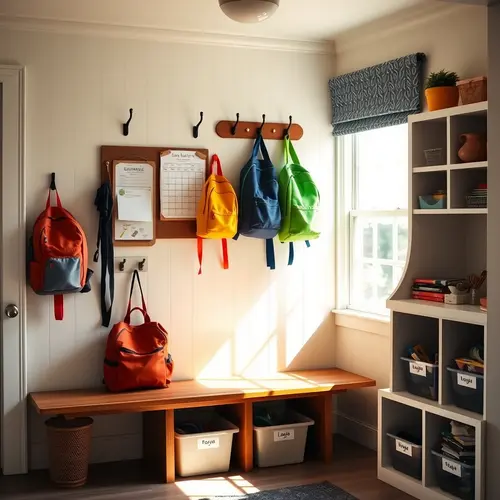
Don’t create systems so complex that maintaining them becomes another chore. Simple bins labeled by category (math supplies, art materials, technology) work better than elaborate filing schemes children won’t use.
Avoid storing school items in multiple locations. Centralized organization prevents the daily hunt for missing items.
Step 6: Address Clothing and Personal Care
Children grow rapidly, making last year’s wardrobe obsolete. Try on existing clothes 3-4 weeks before school starts to identify gaps.
Focus on versatile basics that mix and match rather than trendy pieces. A capsule wardrobe of 8-10 items creates more outfit combinations than 20 random pieces.
Personal care routines also need updating. Older children may need upgraded hygiene products as they enter puberty. Stock bathrooms with appropriate supplies before the first day.
Step 7: Prepare Emotionally and Mentally
The logistics of how to get ready for back to school matter, but emotional preparation is equally important. Many children experience anxiety about new teachers, changing friendships, or academic pressure.
Start conversations about the upcoming year early. Ask open-ended questions about hopes and concerns rather than offering false reassurances.
The National Association of School Psychologists suggests visiting the school building if possible, especially for children entering new schools. Familiarity with the physical environment reduces first-day stress.
Troubleshooting Resistance and Anxiety
If your child shows significant resistance, dig deeper into the cause. Sometimes “I don’t want to go back to school” actually means “I’m worried about a specific class” or “I had a conflict with a friend last year.”
Address specific concerns with concrete plans. For academic worries, arrange tutoring or extra help. For social concerns, facilitate reconnection with friends before school starts.
Expert Insight: The Planning Paradox
Here’s a contrarian truth: over-planning can backfire. Parents who create rigid, perfect systems often find them collapse within two weeks when real life intervenes.
Build flexibility into your approach. If the morning routine isn’t working, adjust it. If the homework station feels wrong, move it. The goal is sustainable systems, not Instagram-worthy perfection.
Some families thrive on detailed charts and schedules. Others need looser frameworks with room for spontaneity. Match your preparation style to your family’s actual functioning, not idealized versions from social media.
Final Preparation Checklist
One week before school starts, conduct a final review:
- All required documents submitted to school
- Supplies purchased and organized
- Sleep schedule adjusted to school-year timing
- Morning and evening routines practiced
- Clothing washed and ready
- Technology updated and functioning
- Transportation plans confirmed
- First-day outfit selected
Understanding how to get ready for back to school transforms preparation from stressful scrambling into confident readiness. The families who succeed treat this transition as a gradual process rather than a last-minute emergency. Start early, break tasks into categories, involve your children in age-appropriate ways, and build systems that match your family’s real needs. The investment in thoughtful preparation pays dividends throughout the entire school year in reduced stress, better organization, and smoother daily routines.



More Stories
Back to School Bulletin Board: 7 Expert Ideas
10 Powerful board decoration ideas for school that inspire
Back to School Makeover: Ultimate 7-Step Guide